The Art of Effective Communication: Interpretations
Thursday, January 24, 2013
Sunday, January 20, 2013
Post Mortem Of A Failed Project
I took on a household project in 2008 that, in retrospect, should have been left to professionals. I decided to build my own custom home theater in the basement of my home in Atlanta. I had a rectangular shaped 30 x 14 foot room in which I wanted to build a three level platform in order to simulate stadium seating for watching movies and entertaining guests. I performed my “research” by looking through multiple home theater magazines and web sites. I was on vacation and planned to begin and complete the project in 13 days (the amount of time that I had left before returning to work).
Unfortunately
the project was a complete and utter failure. If I had any knowledge of the
project management process (or common sense) I would have been a lot more
thorough during the planning phase of the project, make sure that my research
was more thorough. If I had performed a feasibility study I would have realized
several things:
·
I did not possess the carpentry skills that were required to
complete this project
·
I did not own some of the required tools
needed to complete this project
·
I did not even attempt to set a budget for
the project, thinking that whatever money that I spent would pay for itself in
the end.
·
I did not research the design
specifications for the type of platform that I was building
Sunday, December 23, 2012
The Future of Distance Learning
What do you think the perceptions of distance learning will be in the
future (in 5–10 years; 10–20 years)
In the fall of
2005 I enrolled in a brick and mortar M.S. program in order to advance my teaching
career and, of course, my salary. I had previously enrolled in the same program
the prior fall, but was forced to withdraw because of a back injury sustained
in a car accident. When I was finally able to begin the program, I was
hard-pressed to earn my degree as quickly as possible, as a promotion was all
but guaranteed to me. My graduate enrollment advisor informed me that I had the
choice of taking the majority of my classes either face-to-face or online. I
had never taken an online class before; additionally, every educated person
that I knew would make light of online courses, usually poking fun at
commercials from schools like the University of Phoenix. I was quite reluctant
to sign up for any of the online courses, fearing that I would not receive that
same quality of instruction that I would receive in the brick and mortar
classes. This attitude was not uncommon among the general populace for the
majority of the next decade.
Today, things are
quite different. A decade later, people’s attitudes have changed immensely
towards distance learning, particularly with full time professional adults that
do not have the time or scheduling flexibility of a younger person. Due to the
fact that I am a public school teacher, I am surrounded by professionals that
can only get a significant pay raise by attending graduate school. I found that
a lot of teachers spend much of their adult lives in graduate school in an
attempt to improve their quality of life and. This has led to a large number of
adults that don’t have any choice but to enroll in a distance learning program.
What I have noticed in my profession is that over time there has been a gradual
change that went from teachers justifying their choice to attend an online
program, almost ashamedly, to the present where we routinely discuss the rigor
of our programs and often express shock and awe when we encounter a graduate
student that has chosen to attend brick and mortar classes.
The Instructional
Design program that Walden offers is a completely different experience than the
online courses that I participated in almost a decade ago. Programs such as
Walden’s show that while not perfected, distance learning has seen a
significant amount of refinements, making it my personal choice for graduate
education. Due to both the rapid growth and change in perception of distance
learning I can only surmise that the field will continue to grow in both quality
and scope. I also believe that distance learning will become an integral part
of undergraduate and high school education. I don’t think that it is too
far-fetched to see a teen parent at home with their new born engaged in a
remote course instead of missing out on valuable educational time. Also, with
the rapid increase in mobile technology, it is almost assured that the “instant
gratification” populace that is currently emerging will also demand to have their
education a la carte; tools such as the iPad will most likely play an integral
role in the growth of distance education.
How can you as an instructional designer be a proponent for improving
societal perceptions of distance learning?
How will you be a positive force for continuous improvement in the
field of distance education?
I recently applied
for an Instructional Design position at a well-established company in my local
area. One of the most attractive aspects of this company is the fact that
employees are encouraged to continually educate themselves and attempt to innovate
when designing courses. While fulfilling a contract is always the primary goal,
employees are given the liberty to try new approaches and strategies. In a
position such as this, I would most definitely use the opportunity to find and
implement new ways to engage learners and improve the current methods of transferring
knowledge remotely. The key to accomplishing this would most definitely lay in
time spent performing research, as well as studying the research of others.
Saturday, December 22, 2012
Saturday, December 1, 2012
A
growing segment of distance learning is Open Course web sites. These are free
sites in which individuals can view courses that range in subject matter. These
sites generally do not require registration, but in turn, they do not offer
credit or certification of any kind. I have chosen to examine a Stanford Law
School course focusing on the bias of beauty that is prevalent in business
practices. This particular course is offered in a video lecture format, lastly
approximately one hour. This course is accessible via iTunes and can be
retrieved from http://itunes.stanford.edu/.
It
was quite obvious that this course was not tailored towards a true distance
learning environment. The list of course attributes that are conducive to
distance learning is quite short:
·
Accessibility: The Stanford courses are
readily available on iTunes, making them accessible to just about anyone that
owns a computer with internet access
·
Low Tech Equipment Demands: Participants
do not need items such as scanners, cameras or microphones
·
Asynchronous Courses: Learners can
participates in Stanford courses any time of day, stopping and starting as
desired
These are in accordance
with teachings of Dr. George Piskurich in which he emphasizes the importance of
considering the learners access to technology (Piskurich, 2012) and similar
emphasis stated in our course text (Simonson et al., 2012).
The
shortcomings of Stanford Open Course offerings, in my opinion, are quite
numerous:
·
There are no visual aids to assist with
information transfer
·
There is an absence of interactivity
·
Collaboration between learners is not an
option
·
No Consideration of Audience
With
the complete absence of some of the core design principles that should be
included in distance learning planning, I believe that it is more than obvious
that remotely follow the recommendations listed in our text. As I watched the
Open Course it felt no different from watching a video on YouTube. There was no
interactivity during the course and there were no optional follow up activities
provided for the distance learners’ enrichment. The absence of any sort of
assignments whatsoever left me feeling more entertained than educated, which is
not the purpose of a program such as this. While this type of distance module
has it’s uses and does contain excellent information, I am not sure if it
warrants the label of “course” in anything but the most loose of definitions.
Tuesday, November 20, 2012
"A new automated staff information system was recently purchased by a major corporation and needs to be implemented in six regional offices. Unfortunately, the staff is located throughout all the different offices and cannot meet at the same time or in the same location. As an instructional designer for the corporation, you have been charged with implementing a training workshop for these offices. As part of the training, you were advised how imperative it is that the staff members share information, in the form of screen captures and documents, and participate in ongoing collaboration."
When
creating a distance learning module, assessing the use of technology is an
essential component of the planning process (Simonson et. al, 2012). Although
cloud computing has been around in some form for the better part of a decade,
it is only recently becoming a widely recognized as a viable tool for not only
document sharing, but collaboration in its’ truest form; this is a benefit for
designers as it alleviates one of the most critical hurdles in distance
learning. The major hurdle that designers face when implementing the use of one
of these applications is the uninitiated that may resist change. In order to
best address the needs, there are two performance tasks that need to be
addressed: information sharing and ongoing collaboration. There are a variety
of options to address these needs that range in price and complexity. The key
is to find an effective low-cost option that is not too complicated for the
average worker to master in an acceptable time frame.
The
Senior Instructional Designer at the University of Alabama has successfully
integrated Google Docs into both online course development and professional
development for the faculty, stating that Google Docs serves to eliminate the
difficulties of collaborating across great distances and multiple time
zones. Additionally, a team of Florida
State University professors researched the benefits of using Google Docs for
distance learning and presented their findings at the Columbia State University
Learning “Now “ Frontier Conference. Their presentation was called Google Docs:
A Robust Hub for Online Collaboration; in this presentation they emphasized the
affordability, wide compatibility and robust online capabilities. Google Docs
addresses one of the major concerns of distance education practitioners, the
amount of interactivity/collaboration that is possible in a course (Beldarrain,
2006), is appropriately addressed and should be sufficient for most
collaborative scenarios over distance.
Saturday, November 3, 2012
Distance Learning:A Changing Landscape
Prior to the beginning of
this course I had not given explicit thought to the term distance learning. I
defined it to myself in the simplest manner possible, learning at a distance. I
first became aware of distance learning in 1996, when a course at my college
was offered via closed-circuit television. The concept seemed somewhat novel,
but I could not see myself learning in that environment, but was fascinated by
the concept, nonetheless. Prior to being exposed to this form of distance
learning I had heard of correspondence courses that were facilitated through
the postal system, but never took much stock in them because the concept seemed
to leave an open door for cheating and dishonesty.
I enrolled in graduate
school in 2003 in order to earn an M.S. degree in education. The week before
classes were to begin, I was involved in a car accident that led to a back
injury and I was unable to begin my program of study. A little over a year
later, I was eager to re-enroll, but also impatient, as I felt that I should be
much further along in the program. An enrollment advisor pointed out that I had
the option of taking some of my courses online alongside my physical classroom
courses. Initially, I was hesitant to enroll in the online courses because, at
the time, most people looked at online courses as subpar. I decided to take one
just to see if it was an environment that I could both learn and excel in. The positive
experience that I had in that course led me to enroll in more online courses
and ultimately led to me choosing Walden’s completely online program later on.
Later on in life when I
became aware of instructional design I was exposed to the term eLearning.
Initially I assumed that it simply referred to online course such as this one.
Upon further education I learned that eLearning not only refers to online
courses, but to asynchronously deployed modules, video conference courses and
various other variations of computer-based courses. I was amazed that I made a
living in the field of education but was so clueless about the height to which
educational delivery methods had grown. Whereas distance learning was once
limited to static interactions such as using the mail system and later through
two-way video conferencing it is now dynamic and robust with the introduction
of tools such as Camtasia and Captivate. Tablets and netbooks have led to truly
mobile learning. I can take this class at home in my basement, on vacation in
Mexico or even on my cell phone while I am on break at work.
I would have to say that
my revised definition of distance learning would actually not include the word
distance. I would perhaps refer to it as remote learning. There are many
instances in which learners may participate in a deployed module while the
moderator is in the same building or even the room next door. With the advances
in technology, especially wireless and mobile, learning modules can be deployed
remotely at either remote or minimal distances. Now that distance learning is
widely accepted as a not only acceptable, but equal to face-to-face education, its
availability has grown exponentially.
I believe that the future
of distance learning lies in the tablet arena. The iPad has led to a complete
overhaul of the computer industry landscape. The iPad single-handedly forced
Microsoft to alter the concept of the PC in order to remain relevant. Almost
the iPad and Android tablets have achieved a level of saturations in a few
years in that laptops did not in over two decades, with their popularity still
growing. Adobe has added almost point and click functionality to their creative
programs that allow transference to mobile platforms. I believe that this will
lead to distance learning courses and modules being tailored with tablets in
mind. Like laptops unchained people from their home desktops (but they still
had to stop and remain stationary) tablet will allow people to turn on a Bluetooth
earpiece and learn as they walk from place to place, run on a treadmill or even
stand in line for a concert. I believe that tablets are the future of distance
learning.
Sunday, February 26, 2012
EDUC-6115 Course Reflection
As
the weeks passed on in this course, my eyes have opened immensely in regards
to, what I now know, is a complex and intricate study of how people learn. As a
high school educator, one can lose focus on the learning environment outside of
educating children and in the field of instructional design that is a big
mistake. I would have to say that the insight that I have gained into Social
Learning theories is probably the most fascinating information that I was
exposed to in this course, in reference to the learning of others. Due to the
immature nature of high school students, I find that social learning can become
more of a burden than an asset in the classroom in a lot of settings; this can
cause educators to avoid maximizing the learning potential of this theory. I
personally incorporate it as much as I can, but use caution knowing that the
social aspect of learning can easily spiral out of control. Due to the
difference between adult and child learners I never realized the potency of
social learning; entering into this program I expected to learn how to design
materials for adult learners, but did not consider having to design from the
standpoint of incorporating cooperative/collaborative exercises and social activities.
Now that I am aware of this, I am actually substantially more excited. Making use of social learning theories opens
up a whole new world of options that I will be able to access, making me more
valuable as a designer, as well as an educator. Social Constructivism
emphasizes the need for collaboration among learners (Kim, 2001). With software
developers such as Adobe creating suites that allow Instructional Designers to
incorporate social elements into their materials, I am now able to see how
learners in different places can work and learn together effectively.
One
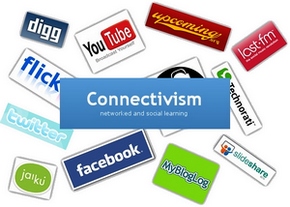
of the more pleasant surprises in this course was the Connectivism learning
theory. I have been known as the “tech geek” in my personal circles, as well as
in my professional environment for a very long time now. My wife has made fun
of me because I “stopped writing” (as she says) in 2005. Grocery/ To Do lists,
phone numbers, educational notes, directions…you name it and I will not write
it down. When I take a person’s contact information, if they do not have a
V-Card, then I force them to give me a V-Note (and usually assist them in
setting up a V-Card). Any time I am introduced to a foreign or unfamiliar
concept, I immediately Google from my phone or tablet and save any relevant
information to the cloud for later study; I also pose questions/scenarios on
Facebook, Twitter, LinkedIn and Quora, tapping into my social networks
constantly. For years, this was the geek in me, but I know that my habits are
actually the elements of a learning theory. Previously, I felt a small bit of
guilt learning this way, as if I was cheating in some way or not really
learning the right way, but now feel, not only justified, but ahead of the
curve having embraced this style of learning almost a full decade before both
my social and professional cohort. The Week 5 video from this course (Seimens, TBD)
discusses Connectivism, placing emphasis not only on the need for social
learning theories examine the how of learning, but the need to seek out and
examine future trends. This is an area that is especially important for those
that learn this way as Connectivism is dependent on technology, which tends to
be old news the day before it comes out. I believe that younger adult learners
can/will thrive in an environment that uses this theory as it’s’ design basis
and believe that I may have found the foundation for my curriculum design
platform.
As
far as learning theories and learning styles are concerned, I have come to
realize that they are not interchangeable terms, as I thought previously. As a
psychology major, the concepts of learning theories were superficially covered
in a class or two, but I do not recall much mention of learning styles,
especially in any way to differentiate between the two substantially. Theories
refer to studying how learner’s minds take in, process and store knowledge
whereas styles refer to strategies that the individual learner uses to
accomplish these tasks. In my opinion, this is the first thing that any and
every instructional designer should learn, as it complete alters ones approach
to curriculum design strategy. As mentioned earlier in this paper, educational
technology, while still an emerging area (Johnson, Levine, & Smith 2009),
is intricately tied into to the adult learning environment and will continue to
grow exponentially from here on out. When learning first became a subject of
study technology was not an option and up until very recently, though existent,
not really part of the equation. Due to the nature of our connected world and
the likelihood that adult learners are more apt to be digitally connected than
most, anyone that is designing curriculum for adults cannot ignore the
interconnectedness nor the inherent importance of Connectivism and learning
theories/strategies.

Motivation
is a beast unto itself that I had not taken into consideration prior to this
course. The distance learning environment is probably the arena that is most
likely to have the highest percentage of people that require extrinsic
motivation; not because a certain type of person takes online courses, but more
likely a person with a certain lifestyle. A lot of online environments consist
of busy professionals and home-makers that simply lack the time to make it to a
face to face learning environment. After a long day of work, putting the kids
to bed and cleaning up there is not usually a lot of enthusiasm in the reserve
tank when it comes to sitting in front of a computer screen at 11:00 p.m. on a
week night. I have two jobs, a 1 year old son that frequently is admitted to
the hospital and graduate school. If I did not have intrinsic motivation oozing
out of my pores, I am not sure where I would be in this program. A situation
like mine is not uncommon and it has made me realize how important it is to
design materials with this in mind. Learning styles and strategies go out the
window when the learner loses interest, making motivation a top priority for
all instructional designers.
I
had a job interview during week 5 of the course; if I had the interview after
week six, I believe that I would have gotten the job. This course has been
quite informative and has me very optimistic about the rest of this program. I
will now approach curriculum design with individual learners’ styles taken into
full consideration, as well as make sure to take aspects of from each of the
different learning theories, instead of subscribing to one, in an attempt to
create materials that do not ostracize any type of learner. Connectivism has
had the most impact on me; I now feel that information technology and
information networks should be at the forefront of adult learning environments
not only because of its social relevance, but because it allows learners to
retrieve information from sources that they are comfortable with and can also
provide learning opportunities, perhaps different instructional styles that the
curriculum creator may not have provided, making learning easier or more
complete.
All
in all, after completing this course, I feel as if I could go into an
organization and properly assist with the design of an adult education course.
While I am admittedly not quite ready to take the helm, I am confident that
valuable I could provide valuable input and using a combination of my
professional experience as an educator and the information that I have received
from this course. I have started the journey into a new and exciting career and
feel confident that this course has provided a solid foundation for the
upcoming career change that I am actively pursuing.
Subscribe to:
Posts (Atom)